Osteoarthritis / Arthritis


Osteoarthritis is the most common type of arthritis — sometimes referred to as ‘wear and repair’ arthritis. Unless you know otherwise then this is the arthritis you have!
Osteoarthritis is a condition where the nice smooth cartilage that covers your joint surfaces breaks down faster than it can repair. We don’t fully know why this happens and why some people get arthritis and some don’t.
The most important thing to remember is It’s nothing to do with too much exercise!! - people like to tell you that it’s all to do with doing lots of sport when you were a child etc. etc. (the stories go on and on!!) but there is no link when we look at all the research.
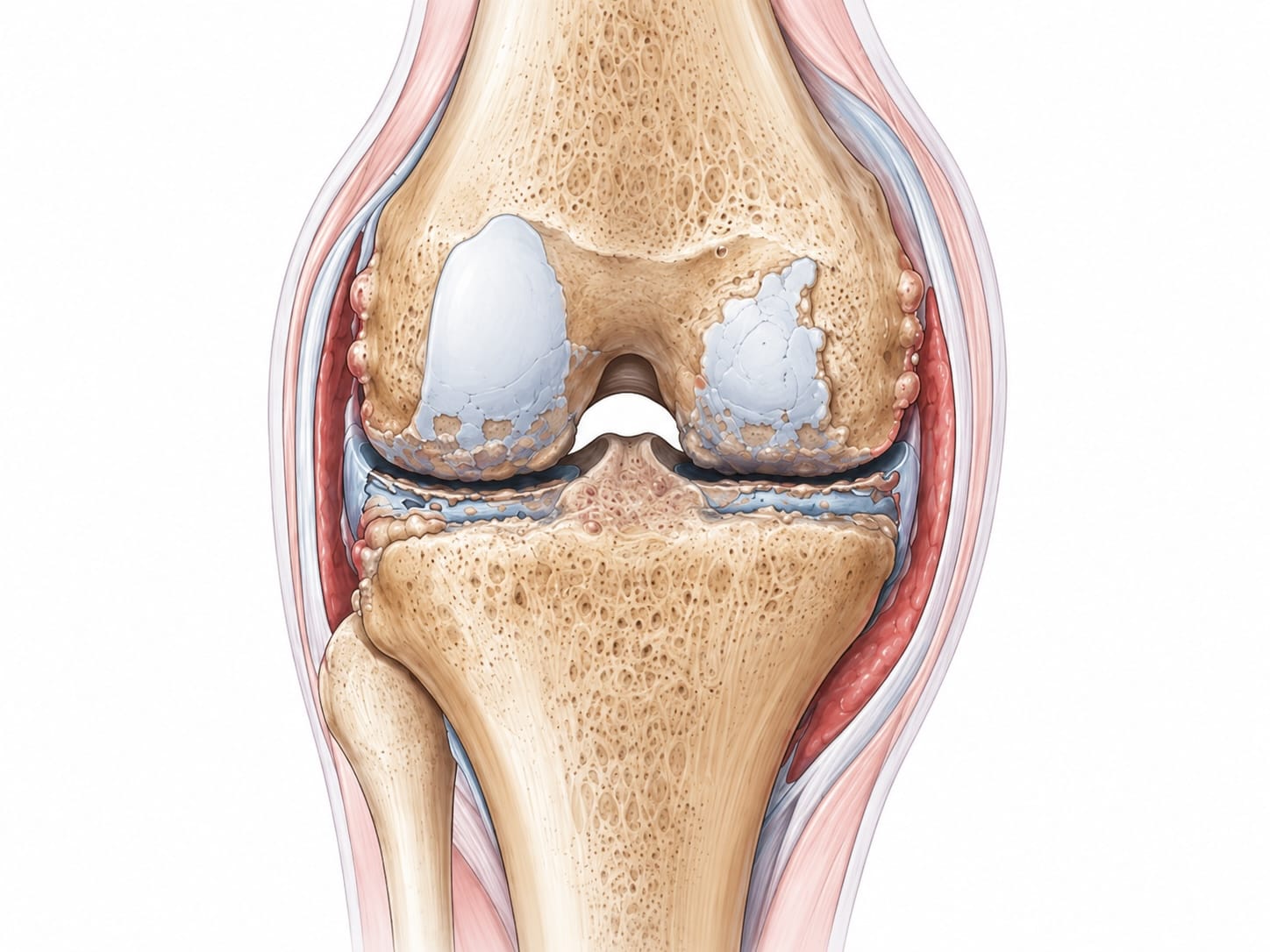
Using the knee here as a very basic example - your joint won't look like this! but you get the idea
Equally there is no link to doing more ‘Impact’ exercise such as running. In fact studies have found that running (like any exercise) is beneficial for people with arthritis! Keeping active and strengthening your joints is one of the main ways of managing arthritis.
Symptoms
So you’ve probably landed here wondering:
“Does this sound like what I’ve got?”
Unfortunately there isn’t a simple yes/no checklist — but there are some common patterns we see.
Common symptoms
People with osteoarthritis often describe:
- Pain in or around the joint (often worse with activity)
- Stiffness, especially after resting or first thing in the morning
- Pain after sitting for a while (e.g. getting up from a chair)
- Difficulty with things like stairs, squatting or kneeling
- A feeling that the joint is “tight” or not moving as freely
- Occasionally some swelling around the joint
A really important point
Symptoms vary a lot from person to person.
Some people have mild stiffness and carry on as normal.
Others find it more limiting day to day.
👉 There isn’t always a clear link between how your joint looks and how it feels.
Not sure if this fits you?
Imaging
This is one of the most confusing areas for people — and honestly, that’s understandable. Even healthcare professionals can find arthritis and imaging a bit of a minefield.
Do I need an X-ray or scan?
Click to learn more
Arthritis is what we call a clinical diagnosis. This means we base it on your symptoms and assessment rather than relying on imaging.
In most cases, an X-ray or scan won’t give us much more useful information than a good clinical assessment.
Are MRI scans better than X-rays?
Click to learn more
Not necessarily. X-rays are actually better at showing bone changes associated with arthritis.
MRI scans can show more detail, but they are not usually needed for diagnosis. They are typically used if there is uncertainty or for surgical planning.
Why doesn’t my scan match my pain?
Click to learn more
This is very common. Some people have severe pain with minimal changes on imaging, while others have significant changes but very little pain.
Because of this, we focus more on your symptoms than what an X-ray or scan shows.
I don’t understand my scan report
Click to learn more
First — don’t panic.
Imaging reports are written in medical language and often list everything seen (even things that aren’t important).
It’s important to go through the results with the person who requested the scan so they can explain what actually matters.
If you're still unsure, you can book a FREE consult with me and I’ll help you make sense of it.
What about private scans?
Click to learn more
The NHS and private systems don’t always link together easily. This means you may still be asked to repeat imaging.
If you’ve had private imaging, ask for a copy (or disk) and bring it to your appointment — this can help speed things up.
If you have any questions about imaging, what you need, or what your results mean, feel free to book a FREE consult using the button below


